Data Plane Signaling
Data Plane Signaling is a specification for interoperable communication between Dataspace Protocol Control Planes and Data Planes (github project).
We decided to fully adopt this specification and to deprecate the current approach. This will involve deprecating the current implementation of the communication layer between the Control Plane and Data Plane in addition to the EDC Data Plane Framework.
Rationale
The Data Plane Signaling specification addresses key architectural ambiguities by clearly delineating the roles of the Control Plane (orchestration and protocol-level authentication) and the Data Plane (actual data transfer and flow-specific authentication). This separation resolves design confusion, establishes symmetry between push and pull patterns, and, most importantly, creates a standard interface. This allows any application to become a compliant Data Plane, fostering innovation and moving the industry toward a future where data sharing is a seamless, integrated layer within sovereign applications, rather than a connector-centric task.
Approach
The implementation of the Data Plane Signaling protocol in the EDC Control Plane is already progressing (issue), we expect to have a fully compliant version as soon as a stable version of the Data Plane Signaling specification is released.
At that point, we will deprecate the EDC Data Plane Framework in its entirety, and after 2 releases, it will be eligible for removal from the codebase. If you are an EDC adopter, we recommend to start prototyping your Data Plane(s) following the current specification. The dataplane-signaling team is already providing SDKs library in different languages (Go, Rust, Java, .NET) to help with this transition.
Let’s see from the technical point of view what are the advantages brought by this approach.
How It Works Now
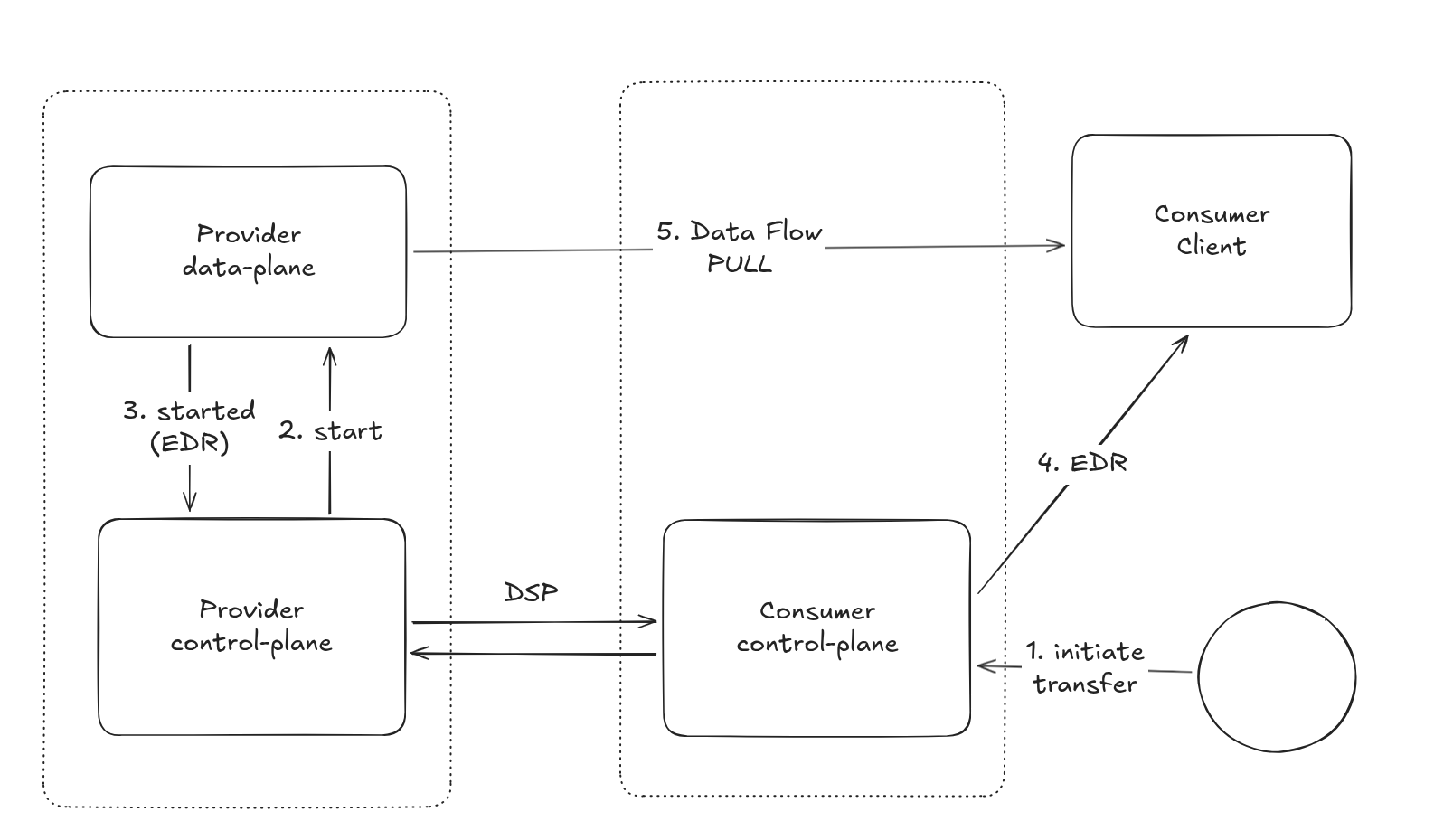
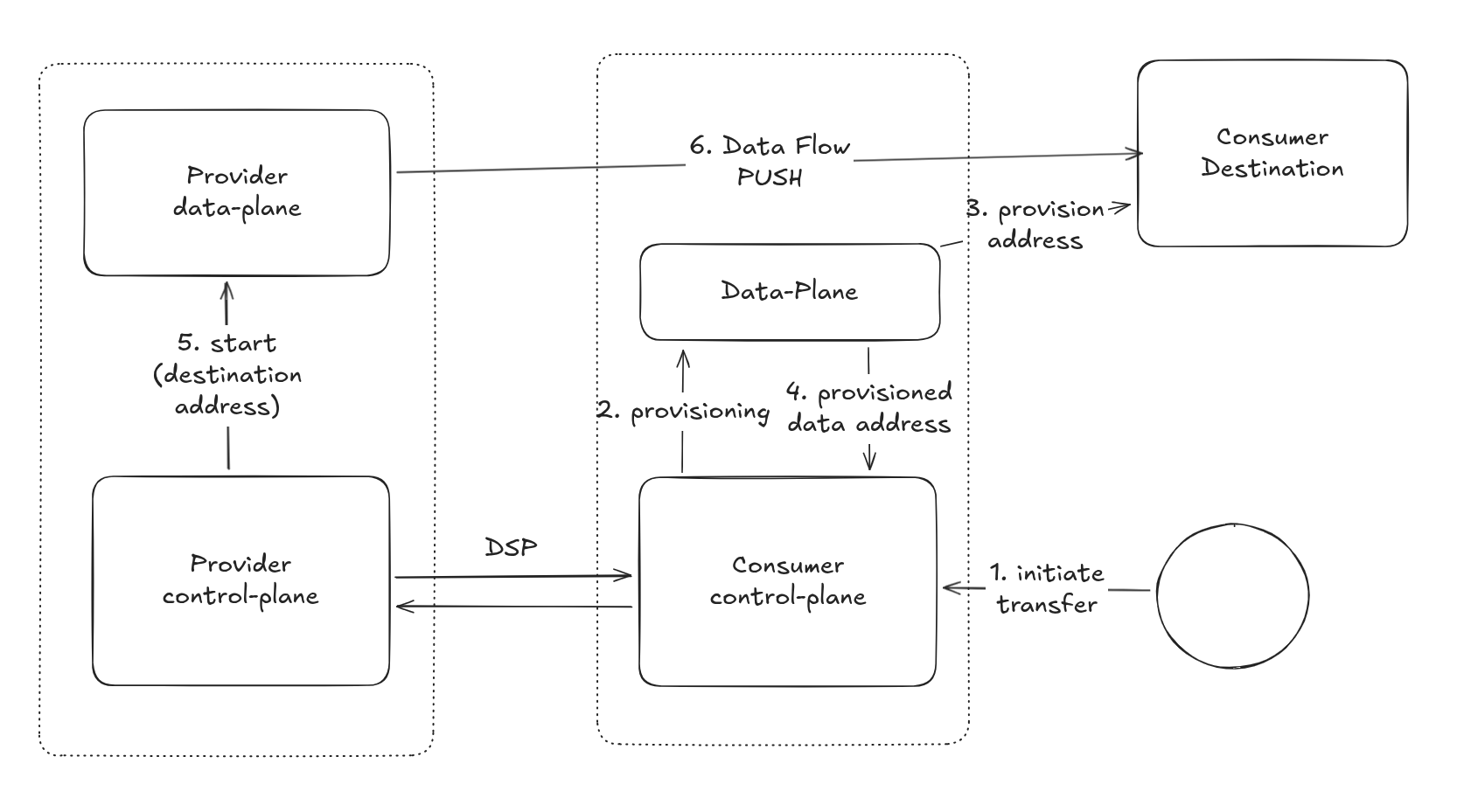
These diagrams are showing the current state-of-the-art; some details have been intentionally left out to focus on the scope of Control Plane and Data Plane interaction.
Two issues become apparent just by looking at the diagrams:
- Vertical grouping: The Data Plane is often considered part of the connector component together with the control plane. While this may not necessarily be an issue, it creates confusion for those building dataspace applications regarding the correct boundaries and leads to poor design.
- Lack of symmetry: The pull and push cases are handled quite differently on the consumer side, and the role of the consumer’s Data Plane/client is not as clear as it should be.
How It Will Work with Data Plane Signaling
Just a glance at the diagrams shows that a strong focus has been placed on separating the dataspace layer from the
“use case/application” layer.
This is not to say they were not separated before, but this specification formalizes it: the Control Plane and Data
Plane are two distinct architectural components serving different purposes.
While the Control Plane is responsible for wire protocol (DSP) communication and dataspace authentication, the Data
Plane handles the actual transfer and receipt of data, managing authentication for the chosen data flow protocol.
With this specification, any application meant to share data in a dataspace can implement the Data Plane Signaling specification and to become a Data Plane. This is the intended path forward: no more direct user-facing interaction with the connector, but rather an application layer that relies on the dataspace to provide sovereign data sharing.

Another interesting concept is that the data address is not managed by the Control Plane anymore: its creation and use happens completely in the Data Plane, while the control-plane just takes care to pass it to the counter-part through DSP.
